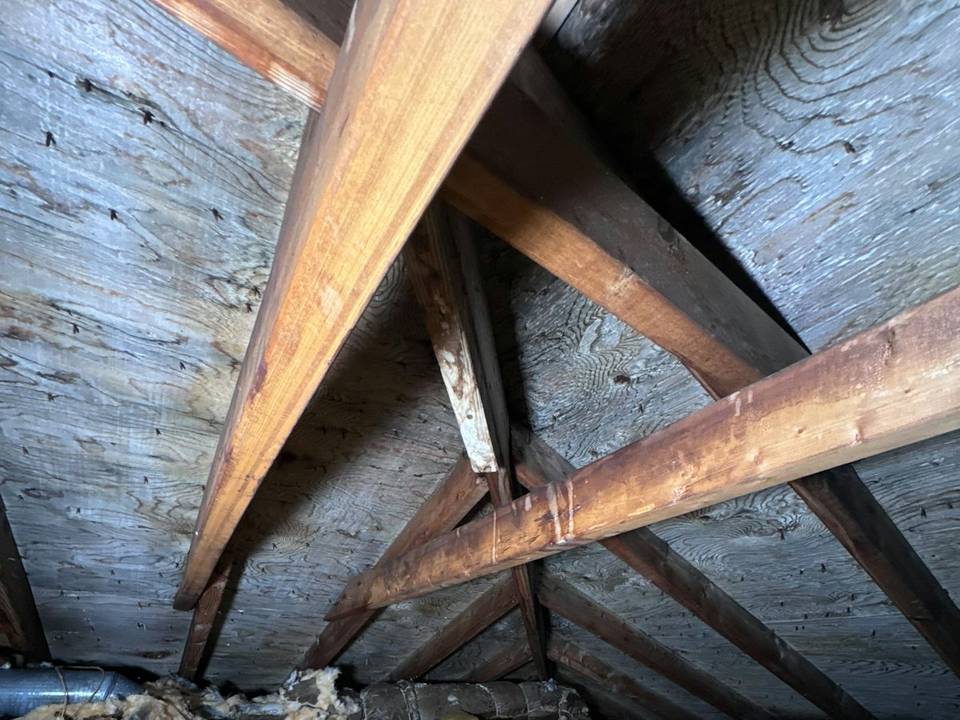
East Texas is green for a reason. The Piney Woods get plenty of rain, and summer air hangs heavy with moisture for months. That humidity does not stop at your front door. It finds its way into the attic, and when it meets the wrong surface at the wrong temperature, it turns into water.
Attic moisture is one of the most common problems we see in homes around Tyler and Longview. Here is how it happens, how to spot it, and what insulation and air sealing can and cannot do about it.
How condensation forms in an attic
Air always holds some water vapor. Warm air holds more than cool air. When warm, damp air touches a surface cooler than its dew point, the vapor turns back into liquid. It is the same thing you see on a cold glass of tea on the porch.
In an East Texas attic, that can happen in two directions:
- Summer: hot, humid attic air meets cold ductwork, a cold air handler or a ceiling chilled by the AC below.
- Winter: warm, moist air from the house leaks up into the attic and meets the underside of a cold roof deck on a chilly night.
Either way, water collects where it should not, and wood, insulation and drywall pay the price.
Sweating ductwork
Many homes here have the air handler and ducts in the attic. In July, those ducts carry cold air through one of the hottest, dampest spaces in the house. If the duct insulation is thin, torn or crushed, or if the joints leak, the outside of the duct can drop below the dew point and start to sweat.
The water drips onto the insulation below. Over time you may see brown rings on the ceiling under a duct run, clumped insulation, or a musty smell from the vents. Fixing it usually means sealing and wrapping the ductwork properly, and sometimes rethinking where the ducts live. Bringing them inside the conditioned space with spray foam on the roof deck is one way to do that.
Bath fans that vent into the attic
This one is surprisingly common. A bathroom exhaust fan is supposed to push steamy air outdoors. In many homes, the fan duct ends in the attic, has come loose, or simply blows toward a soffit vent and hopes for the best. Every shower then sends a cloud of warm, wet air straight into the attic.
The EPA recommends venting moisture producing appliances to the outside, and the same logic applies to bath fans. If you find a fan duct lying loose in the insulation, or you see staining and mold on the decking right above a bathroom, this is a likely cause. Dryer vents deserve the same check.
Ventilation and air leaks
Most attics in older homes are designed to be vented, with intake vents low at the soffits and exhaust vents high near the ridge. That airflow helps carry heat and moisture out. Problems start when the soffits are blocked by insulation, the vents are undersized, or the balance between intake and exhaust is off.
Just as important is air leaking up from the house. Gaps around recessed lights, plumbing stacks, wiring, the attic hatch and the tops of walls let indoor air into the attic, carrying moisture with it. The U.S. Department of Energy recommends sealing air leaks before insulating, and in a humid climate that step does double duty.
Mold on the roof decking
Dark spotting or staining on the underside of the roof decking is a sign that moisture has been sitting there. It often shows up first on the north side of the roof, which stays cooler, or right above bathrooms and kitchens. Heavy frost or water droplets on nails poking through the deck on a cold morning tell the same story.
Light surface staining on solid wood can often be cleaned once the moisture source is fixed. Insulation is different. The EPA notes that absorbent materials may need to be thrown out if they become moldy. Wet or moldy insulation should come out, which is where our insulation removal service comes in. Significant mold on framing or decking is a job for a mold remediation professional.
How insulation and air sealing help
- Air sealing keeps damp house air out of the attic in winter and cuts the dust and pollen that drift down in spring.
- Proper attic floor insulation keeps ceilings closer to room temperature and slows heat from above. See our blown in attic insulation service.
- Well insulated, sealed ducts stay above the dew point and stop sweating.
- A radiant barrier cuts roof heat, which eases the load on attic ductwork.
Insulation will not fix a roof leak, a disconnected bath fan or a blocked soffit. Those need to be corrected first.
Open cell foam in a humid climate
Open cell spray foam on the underside of the roof deck is a popular way to seal an attic and bring ducts inside the conditioned space. Done well, it can make a big difference in comfort. But it changes how the house handles moisture, and it is not something to add as an afterthought.
Open cell foam lets water vapor pass through it. Once the attic is sealed, it is no longer flushed with outdoor air, so the house needs a way to keep humidity in check. That usually means the HVAC system is sized and set up for the new conditions, and some homes need a small amount of conditioned air or dehumidification in the attic. Code requirements for vapor control and coatings also apply. The point is simple: an unvented attic is a system, and it needs proper design. Compare options in spray foam vs fiberglass.
Quick checklist
- Look for dark spots on the decking, rusty nails and stained insulation.
- Follow every bath fan and dryer duct to make sure it exits the house.
- Check duct wrap for tears, gaps and dampness.
- Make sure insulation is not blocking soffit vents.
- Keep indoor humidity below 60 percent, as the EPA advises.
Every attic has its own mix of causes. Our guide to what affects insulation cost explains what shapes the scope of a project, and we serve Tyler, Longview, Lindale, Whitehouse and nearby communities.
Seeing stains, noticing a musty smell or worried about what is happening above your ceiling? Book a free attic inspection and we will track down the moisture source and lay out your options in writing.