Spray foam vs fiberglass: which is right for your house?
A straight comparison for humid East Texas homes. Spray foam wins some jobs, blown in fiberglass wins others, and price is only part of the story.
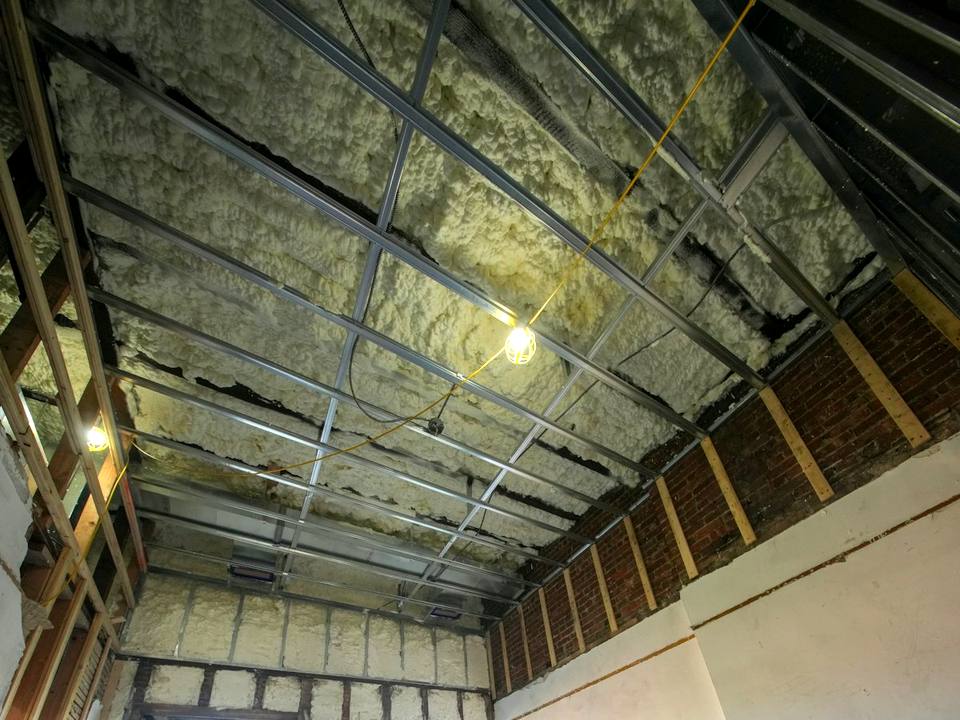
The quick version
If your attic is dry, your ducts are in good shape and you just need more depth, blown in fiberglass usually gives you the most comfort for the money. If the house feels muggy even with the AC running, the ducts live in the attic, the home is older and drafty, or you have a damp crawl space or metal building, spray foam often justifies the higher price.
| Blown in fiberglass | Spray foam | |
|---|---|---|
| Main job | Slows heat through the attic floor | Slows heat and blocks air leaks |
| Typical location | Spread over the attic floor | Under the roof deck, in walls or under floors |
| Humid outside air | Still leaks in through gaps unless sealed separately | Kept out at the seams it covers |
| Ducts in the attic | Remain in a hot, humid space | Brought inside the sealed shell |
| Crawl spaces | Not used there | Closed cell resists ground moisture |
| Relative price | Lower | Higher |
| Over the years | Settles a little | Stays put |
Six reasons East Texas homeowners pick spray foam
Followed by the cases where they should not.
It closes air leaks
Foam fills the cracks that loose fill and batts leave open, so less damp air gets inside.
Ducts stop sweating
Inside a sealed attic, cold ducts are no longer surrounded by humid air that condenses on them.
A milder attic
Foam on the roof deck keeps the attic much closer to the temperature of the house.
Drier crawl spaces
Closed cell foam under a pier and beam floor stands up to moisture from the ground.
Metal roofs stay dry
Closed cell foam stops condensation in shops and barns.
Less pollen indoors
A tighter house lets in less of the spring pine pollen that coats everything outside.
When fiberglass makes more sense
- Depth is the only problem. A top up costs much less and fixes the main issue.
- Your attic is dry and ducts are sealed, or the air handler sits inside the house.
- You are working with a tight budget. A well done blown in job is a big improvement on its own.
- A new roof is coming soon. Some owners prefer to time roof deck foam with the new roof.
What it means for East Texas homes
East Texas summers are hot, but the humidity is what sets this area apart. Attics here can carry a lot of moisture, and ductwork running through them can sweat and drip. Sealing the attic with foam on the roof deck takes that humid air out of the picture, which is why it tends to pay off most in homes with ducts overhead.
Older houses in Tyler, Longview and Kilgore often lose more comfort to air leaks than to thin insulation, and many sit on pier and beam foundations with open crawl spaces below. Those homes usually benefit from air sealing and closed cell foam under the floor. Newer single story homes in Whitehouse, Lindale and Bullard with a reasonable attic depth are often well served by a blown in top up, plus a radiant barrier if the roof gets full sun.
Learn more
See what affects insulation cost. For what goes under the floor, read crawl space insulation in East Texas, and for damp attics, read attic moisture in a humid climate.
Get a recommendation for your house
Prefer to talk? Call us and we will set up your free inspection.