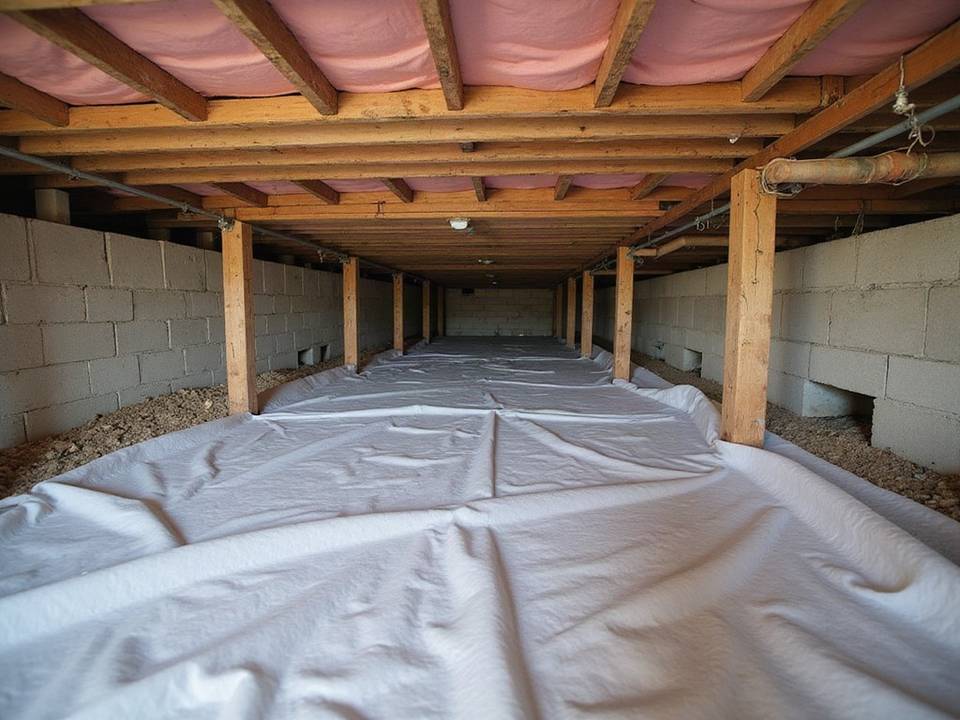
A lot of East Texas homes sit up off the ground on piers. Walk through an older neighborhood in Tyler or Longview and you will see plenty of them: wood frame houses with a few feet of open crawl space underneath. That design has served the region for generations, but it comes with two familiar complaints. The floors are cold in winter, and the space underneath is damp most of the year.
This guide covers how crawl space insulation works in a humid climate, what tends to go wrong, and how to tell which fix your home actually needs.
Why pier and beam floors feel cold
In a pier and beam house, the only thing between your feet and the outdoor air is the subfloor and whatever insulation is stapled up under it. When a winter cold snap or an ice storm rolls through, the air in a vented crawl space is close to the outdoor temperature. Bare or poorly insulated floors pull heat out of the rooms above, and cold air leaks up through gaps around plumbing, ducts and floor registers.
For floors over a crawl space in climate zone 3, ENERGY STAR recommends R-19. Many older East Texas homes have far less, or batts that have fallen out of place years ago.
The humidity problem underneath
Summer is the harder season for a crawl space here. Warm, muggy outdoor air drifts in through the vents and meets the cooler ground and the floor framing, which sits just under an air conditioned house. When damp air meets a cool surface, moisture condenses. Add bare soil that gives off water vapor, heavy rain and poor drainage, and the crawl space can stay humid for months.
That moisture shows up as:
- Fiberglass batts that sag, drip or fall to the ground
- Damp or darkened floor joists and subfloor
- Mold or mildew on wood and on the paper facing of batts
- Sweating ductwork and pipes
- A musty smell that works its way into the house
- More insects and rodents, which like damp, sheltered spaces
The EPA advises keeping indoor humidity below 60 percent to limit mold. A wet crawl space works against that goal every day.
Why fiberglass batts struggle down there
Fiberglass batts are the most common floor insulation in older homes, and they are the most likely to fail in a damp crawl space. They hold moisture, get heavy and pull away from the subfloor. Once there is a gap between the batt and the floor, air moves freely and the insulation does little. Wet batts can also hold moisture against the wood. If yours are hanging, soggy or moldy, they usually need to come out. Our insulation removal crew handles that work.
Option one: closed cell foam on the subfloor and rim joist
Closed cell spray foam is dense and rigid. It bonds directly to the underside of the subfloor and the rim joist, the band of framing that runs around the edge of the house. Because it sticks to the wood with no gap, damp air cannot get behind it. It also seals the cracks and holes where cold air sneaks up into the house.
- It does not sag or fall like batts.
- It resists moisture far better than fiberglass.
- It packs a high R-value into a thin layer.
- Sealing the rim joist alone can make a noticeable difference in drafts.
Foam is not a cure for standing water or a leaking pipe. Those problems need to be fixed first, or the foam simply covers them up. Learn more on our spray foam insulation page, or compare options in spray foam vs fiberglass.
Option two: crawl space encapsulation
Encapsulation takes a different approach. Instead of insulating the floor, the crawl space is treated as part of the house. The vents are closed, a heavy vapor barrier covers the ground and often runs up the walls, the foundation walls are insulated, and the space usually gets a dehumidifier or a small supply of conditioned air.
The U.S. Department of Energy notes that an unvented crawl space is generally the better choice in hot, humid climates, and recommends covering the ground with a thick vapor barrier. For homes with serious moisture, encapsulation is often the right long term answer.
To be straight with you: full encapsulation is often a separate specialty. It can involve drainage, sump pumps, dehumidifiers and HVAC changes that go beyond insulation work. If your crawl space has standing water, wet soil after every rain or ongoing mold, you may need an encapsulation or drainage contractor, and we will tell you so. Insulating the floor of a crawl space that floods will not solve the real problem.
Which approach fits your home
- Cold floors, crawl space mostly dry: closed cell foam on the subfloor and rim joist, or new properly supported insulation.
- Sagging or wet batts, no standing water: remove the old batts, then insulate.
- Standing water, wet soil or heavy mold: fix drainage and consider encapsulation first.
- Musty smell in the house: get the crawl space inspected before anything else.
Signs it is time to look underneath
- Floors that feel cold or drafty in winter
- Soft or bouncy spots in the floor
- A musty or earthy smell indoors
- Higher energy use with no other explanation
- Batts you can see hanging through the vents
- Gaps or cupping in wood floors
Every crawl space is different, which is why it pays to see it before deciding. Read what affects insulation cost for the factors that shape a crawl space project. We work on pier and beam homes in Tyler, Longview, Kilgore and the surrounding area.
Tired of cold floors or a musty crawl space? Schedule a free crawl space inspection and we will look underneath, explain what we find and give you a written recommendation, including when a specialist is the better call.