Spray foam insulation in East Texas
Open and closed cell foam that insulates and seals out humid air, for attics, walls, crawl spaces and metal buildings.
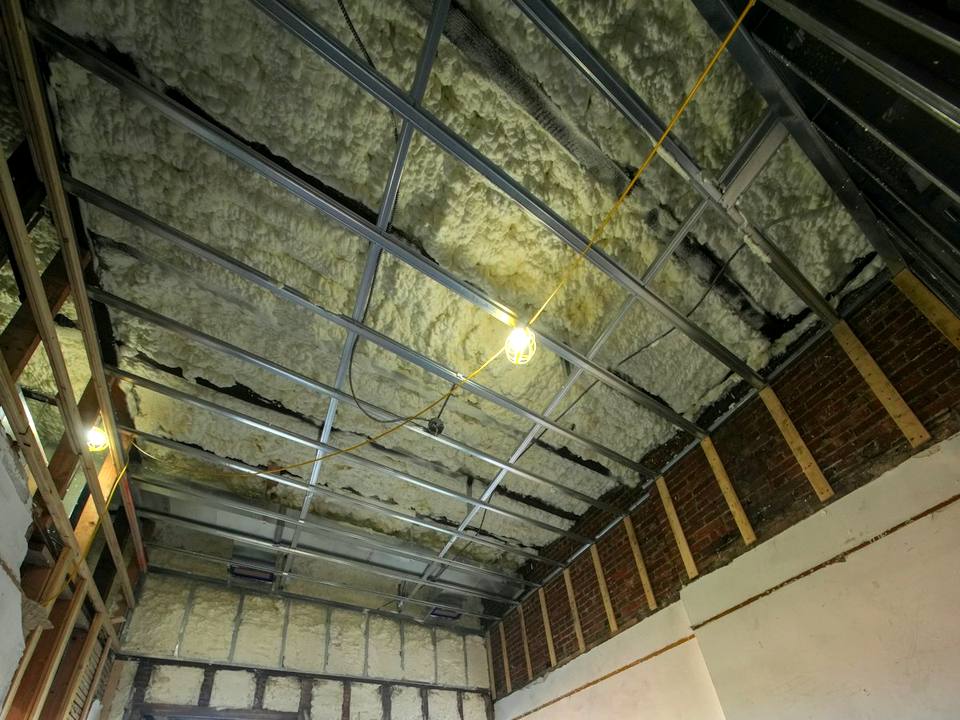
Foam that insulates and stops humid air
Loose fill and batts slow down heat, but air moves right through them. Spray foam goes on wet, expands into every crack and seam it touches, and sets up solid. Once it cures it stays put. No settling, no sagging, and nothing for the wind to shift around.
In the Piney Woods, sealing out air is half the value. From May through September the air in Tyler and Longview feels like a wet towel. Each gap around a can light, a bath fan or a plumbing stack pulls that muggy air inside, and your AC spends its energy wringing the water out of it before it can cool anything. Foam shuts those openings at the same time it adds R value.
The job we do most often is open cell foam sprayed under the roof deck. That puts the attic, the air handler and the duct runs inside the conditioned envelope instead of baking in a hot, damp attic. Under older pier and beam houses, we usually reach for closed cell, since it stands up to moisture coming off the ground.
- Open cell for the underside of roof decks, walls and sound control
- Closed cell for crawl spaces, rim joists and steel buildings
- Air sealing at wall tops, wire and pipe penetrations and attic hatches
- Code required coatings like ignition barriers where they apply
- No cost inspection with a written quote before we start
Which foam is right for your house?
The two types are cousins, not twins, and the biggest difference is how they handle moisture. In a climate this humid, we pick based on where the foam is going and how wet that area stays.
| Open cell | Closed cell | |
|---|---|---|
| Feel | Soft and spongy | Hard and rigid |
| R value per inch | About R-3.5 to R-3.8 | About R-6 to R-7 |
| Moisture | Lets vapor through | Acts as a vapor retarder |
| Cost | Lower | Higher |
| Best used for | Roof decks, interior walls, quieter rooms | Crawl spaces, rim joists, metal shops and barns |
Wondering about the area under your floors? See our guide to crawl space insulation in East Texas.
Where foam is worth the price in East Texas
Ducts in a hot attic
Foaming the roof deck pulls your ducts out of the heat and out of the damp air that makes them drip.
Wet crawl spaces
Closed cell under a raised floor warms the floors and holds up to ground moisture.
Leaky older houses
Many older homes around Tyler, Longview and Kilgore have gaps at nearly every joint. Foam fills them.
Metal shops and barns
Closed cell keeps steel buildings comfortable and stops condensation from raining off the roof.
When foam is overkill: if the attic stays dry, the ducts are sealed and all you need is more depth, blown in insulation is the better buy. We will say so if that fits your house.
How a spray foam job goes
Inspect
We check the roof deck or crawl space, wiring, ducts, venting and any sign of water or mold.
Quote in writing
Foam type, thickness and every area included, laid out line by line.
Protect and prep
Floors, walls and belongings get covered. Vents are closed or left open based on the plan.
Spray and clean up
The crew sprays to the quoted depth, trims as needed and cleans the work area.
Spray foam pricing
Foam is sold by the board foot, which is one square foot at one inch deep. The total depends on square footage, thickness, open versus closed cell, and how easy the space is to work in. Low crawl spaces and steep, cramped attics take more time.
We price every project in writing after a free visit. Our guide to what affects insulation cost covers what to look for when you compare bids.
Spray foam questions
Is spray foam a good idea in a humid place like East Texas?
- Yes, as long as the right foam goes in the right spot.
- Open cell is used where vapor can move safely. Closed cell goes where moisture never really leaves, like a crawl space.
Do you seal off the attic vents?
- In an unvented roof deck design, yes. The attic becomes part of the conditioned house.
- We go over the plan for your home before the crew shows up.
Will roof deck foam affect my shingles?
- Foaming the roof deck is a common method recognized by building codes.
- Check your shingle warranty first, and we can look it over with you.
Is there a smell after spraying?
- Yes, while it goes on and cures.
- Plan to stay out for the time the manufacturer lists, usually about 24 hours.
How long is a typical job?
- Most attics or crawl spaces take one day. Large homes and steel buildings can take two.
More Insulation Services and Guides You’ll Love
Get a free spray foam estimate
Prefer to talk? Call us and we will set up your free inspection.