Batt insulation in East Texas
Fiberglass and mineral wool batts for walls, additions and floors over crawl spaces, cut to fit with no gaps.
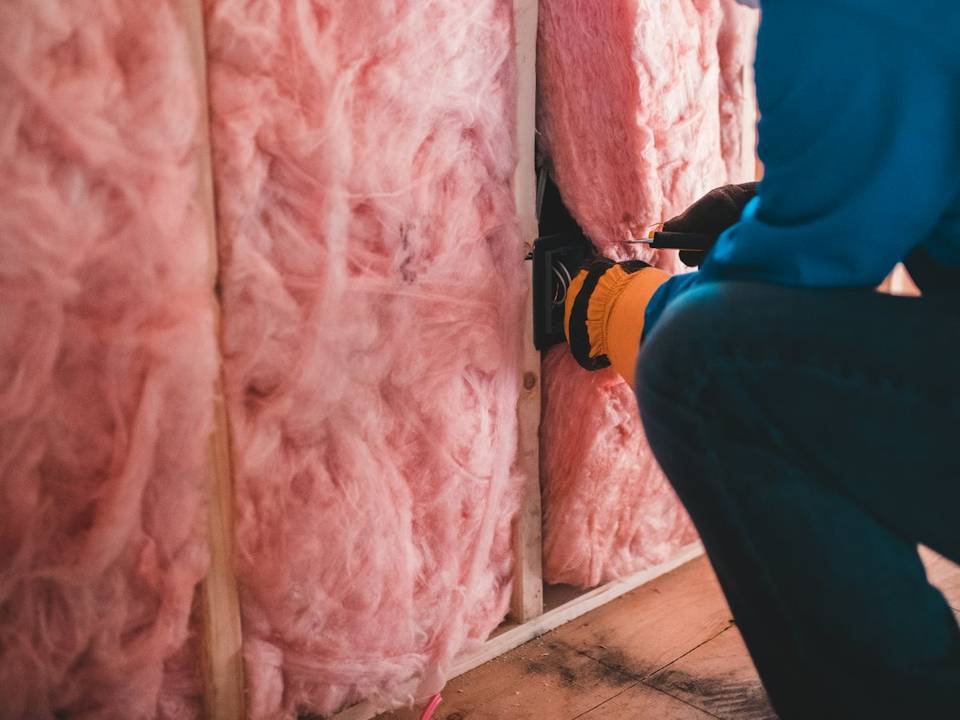
Batts for walls, floors and crawl spaces
Batts are blankets of fiberglass or mineral wool cut to fit between studs and joists. They are the go to choice when framing is open: new homes, additions, remodels and the underside of floors in pier and beam houses.
A batt only reaches its rated R-value when it fills the cavity completely. Gaps along the edges, batts crushed behind pipes, or holes left around outlets let heat and humid air get by. We cut and split each piece around whatever is in the way, which is also what inspectors want to see.
Under an older home, batts between the floor joists can warm up cold floors. They need solid support so they do not sag, and the crawl space needs to be reasonably dry. Where it stays damp underneath, we will recommend closed cell foam instead.
- Exterior walls in new homes, additions and remodels
- Floors over crawl spaces, garages and porches, with proper supports
- Interior walls to quiet bedrooms, baths and media rooms
- Fiberglass or mineral wool, with the differences explained
- Free estimate from your plans or a visit to the site
Batts, blown in or spray foam?
| Location | Usually the best fit | Why |
|---|---|---|
| Open walls in a new build | Batts or spray foam | Batts cost less, foam adds an air seal |
| Attic floor in an existing home | Blown in | Fills around joists and wires without seams |
| Floor over a dry crawl space | Batts with supports | Fits between open joists from below |
| Floor over a damp crawl space | Closed cell spray foam | Holds up against ground moisture |
| Rim joists and odd shapes | Closed cell spray foam | Seals spots batts cannot fill |
For more on what goes under the floor, read crawl space insulation in East Texas. ENERGY STAR recommends R-19 for floors over unconditioned space in this climate zone.
Signs of a careful batt install
No gaps at the plates
Each batt runs the full height of the cavity and touches every side.
Split, not squeezed
Batts are split around wires and pipes instead of crushed behind them.
Neat around boxes
Outlets and switches are cut around cleanly, never stuffed or skipped.
Supported under floors
Floor batts are held tight to the subfloor so they do not sag over time.
Built around your schedule
Plans or a visit
Send your plans or have us walk the job.
Written estimate
Material, R-value and areas covered, all on paper.
Install after rough in
We come in once wiring, plumbing and ductwork are set.
Ready to inspect
Full, tidy cavities ready for the inspector and drywall.
What batt insulation costs
The price depends on how much wall or floor area there is, the cavity depth, the R-value and material you pick, and access. Crawl space work under an older home takes more time than open walls in a new build.
See what affects insulation cost, or send us your plans for a price.
Batt insulation questions
Can batts go under my pier and beam floor?
- Yes, if the crawl space stays reasonably dry.
- If it is damp most of the year, closed cell foam is the safer choice.
Can you put batts in finished walls?
- Not without opening the drywall. For closed walls, insulation blown in through small holes usually works better.
Fiberglass or mineral wool?
- Fiberglass costs less.
- Mineral wool is denser, quieter, more fire resistant and shrugs off moisture better.
Do you work with builders?
- Yes. We price from plans and fit into the build schedule.
Get a free batt insulation estimate
Prefer to talk? Call us and we will set up your free inspection.